


 HOME
HOMETop 10 Uses of Steel Pipe Testing Machine in Manufacturing
06 January 2026
In real manufacturing environments, steel pipes are rarely tested “just in case.”They are tested because failures are expensive, dangerous, and often irreversible once pipes leave the factory.
From water supply lines to oil, gas, and structural applications, steel pipe testing machines play a quiet but critical role in quality assurance. Below is a practical, experience-based look at the ten most common and valuable uses of steel pipe testing machines in modern manufacturing.
What is a steel pipe testing machine?
A steel pipe testing machine is used to apply controlled internal pressure—most commonly water, sometimes air—to a pipe in order to evaluate its strength, sealing performance, and structural integrity.
Depending on the production scale, testing can be:
-
Manual (for small batches or labs)
-
Semi-automatic
-
Fully automated and integrated into production lines
The goal is always the same: verify that the pipe will perform safely under real operating conditions.
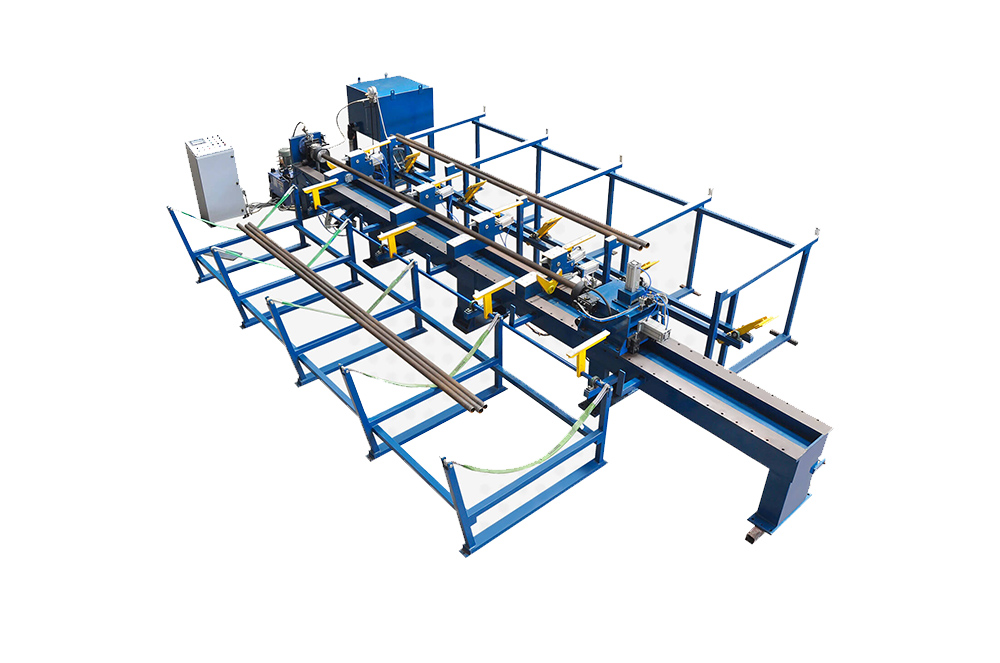
1. Hydrostatic pressure testing for compliance
Hydrostatic testing is one of the most widely required tests for steel pipes.
In this process, the pipe is filled with water and pressurized to a specified level for a fixed period of time. If the pressure remains stable and no leakage occurs, the pipe passes.
Why manufacturers rely on it:
-
Required by many international standards and project specifications
-
Provides documented proof of pressure resistance
-
Safer than gas-based testing due to water’s low compressibility
This test is often the final checkpoint before shipment.
2. Leak detection in welded and seamless pipes
Small leaks are not always visible to the naked eye, especially in welded pipes.
Steel pipe testing machines allow manufacturers to detect:
-
Micro-cracks
-
Pinholes
-
Poor weld seams
This is particularly important for ERW pipes, where seam defects may only appear under pressure. Catching these issues early prevents costly customer complaints later.
3. Burst testing to determine safety margins
Burst testing involves gradually increasing pressure until the pipe fails.
While destructive, this test provides valuable data:
-
Maximum pressure capacity
-
Actual safety margin beyond design pressure
-
Weak points in material or manufacturing process
Burst testing is commonly used during product development or when validating a new pipe design.
4. Fatigue testing under cyclic pressure
Not all failures happen suddenly.
In many applications, pipes experience repeated pressure fluctuations. Fatigue testing simulates these conditions by applying cyclic pressure over thousands or even millions of cycles.
Typical use cases include:
-
Hydraulic systems
-
Industrial fluid transport
-
High-pressure process lines
The results help manufacturers estimate service life more realistically.
5. Monitoring deformation and dimensional stability
Under pressure, steel pipes may:
-
Expand slightly
-
Permanently deform
-
Lose dimensional accuracy
Advanced testing setups use sensors to measure deformation during and after testing. This is especially important when pipes must meet strict dimensional tolerances for automated assembly or prefabricated systems.
6. Weld seam integrity verification
Weld seams are often the weakest point in a steel pipe.
Testing machines help evaluate seam integrity by applying uniform pressure along the entire pipe length. Even minor welding inconsistencies can be identified before pipes reach the customer.
In practice, this step significantly reduces field failures in large pipeline projects.
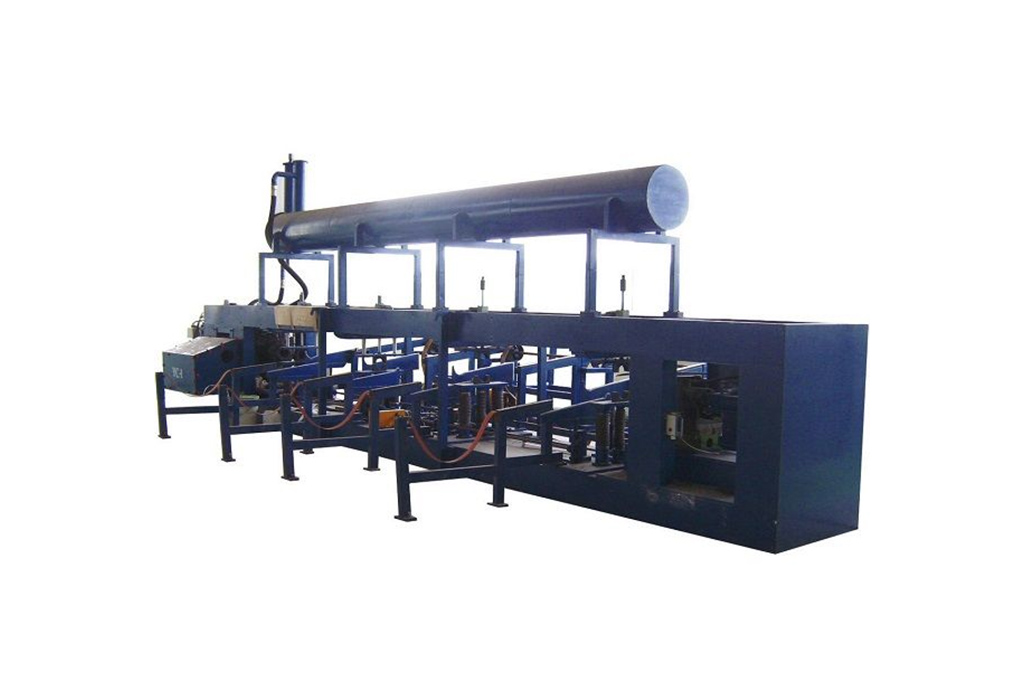
7. Coating and corrosion resistance evaluation
Some steel pipes are tested after internal or external coatings are applied.
By combining pressure testing with immersion or chemical exposure, manufacturers can verify:
-
Coating adhesion
-
Resistance to blistering or peeling
-
Performance under operating pressure
This is particularly relevant for pipes used in corrosive or humid environments.
8. Assembly and system-level pressure testing
Steel pipes are rarely used alone.
Testing machines are often used to pressurize assembled systems that include:
-
Flanges
-
Valves
-
Fittings
This ensures the entire system—not just individual pipes—performs reliably once installed on-site.
9. Inline testing in high-volume production
For large-scale manufacturers, steel pipe testing machines can be integrated directly into production lines.
Benefits include:
-
100% or sample-based inspection
-
Automatic pass/fail sorting
-
Reduced reliance on manual checks
Inline testing improves consistency while keeping production efficient.
10. Research and development validation
In R&D environments, testing machines are used to evaluate:
-
New steel grades
-
Different wall thicknesses
-
Optimized pipe geometries
The data collected supports better design decisions before mass production begins.
Practical comparison of common testing applications
|
|
|
|
|---|---|---|
|
Testing purpose |
Method |
Key outcome |
| Hydrostatic test | Water pressure hold | Compliance verification |
| Leak detection | Pressure decay / visual | Defect identification |
| Burst test | Increasing pressure | Safety margin data |
| Fatigue test | Cyclic pressure | Service life estimation |
| Deformation check | Sensor measurement | Dimensional control |
| Weld testing | Full-length pressurization | Seam integrity |
| Coating test | Pressurized immersion | Corrosion resistance |
| Assembly test | System pressurization | Installation reliability |
| Inline testing | Automated stations | Production efficiency |
| R&D testing | Custom test setups | Design validation |
Steel pipe testing machines are not just inspection tools—they are risk management tools.
By applying controlled pressure in a controlled environment, manufacturers gain confidence that their products will perform as expected once installed. In industries where failure is not an option, this confidence is essential.


