


 HOME
HOMESteel Pipe Testing Machine Explained in Simple Terms
09 January 2026
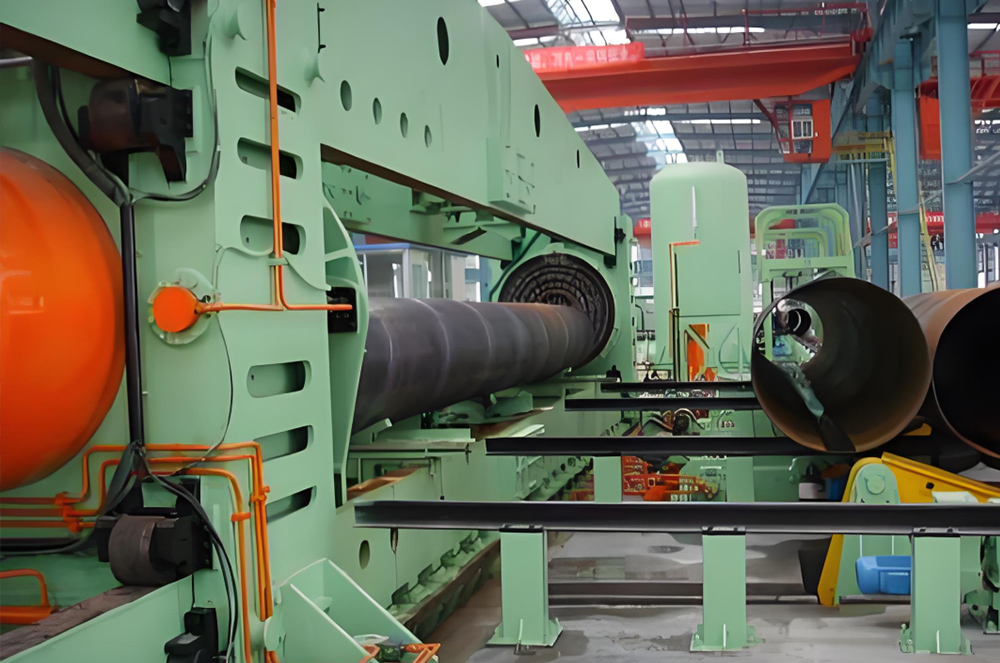
Pipes look simple from the outside — a hollow steel tube — but making sure a pipe will behave reliably under pressure takes more than a quick visual check. A steel pipe testing machine is the workshop tool that answers one basic question: will this pipe hold up when it matters? Below is a straightforward, technician-friendly explanation of what these machines do, the common test types, and what results mean for manufacturers and buyers.
What is a steel pipe testing machine?
At its core, a steel pipe testing machine pressurizes a pipe and watches how it responds. Pressure is applied (usually with water, sometimes with air) and instruments record whether the pipe leaks, deforms, or bursts. Tests can be simple pass/fail checks or detailed measurements logged for certification.
Think of it as a controlled “stress moment” for the pipe — performed in the factory, not in the field.
Why testing matters — plain facts
-
Failures cost money and reputation. A single leaking pipeline in service can lead to expensive downtime or safety incidents.
-
Standards and buyers often require test certificates. No certificate, no shipment.
-
Testing finds manufacturing defects that visual inspection misses: micro-leaks, seam weaknesses, or dimensional drift under pressure.
In short: testing turns uncertainty into a documented decision.
Common test types — what you’ll actually see on the shop floor
1. Hydrostatic test
-
How: Fill pipe with water, raise pressure to a set level, hold for specified time.
-
Why used: Most common for certification. Water is safe (low compressibility) and clearly shows leaks.
-
Typical output: Pass/fail, pressure-hold graph, any observed leakage.
2. Pneumatic (air) test / Pressure-decay
-
How: Pressurize with air or inert gas, monitor pressure loss over time.
-
Why used: Faster for certain assemblies, but riskier if a rupture occurs (air stores energy).
-
Typical output: Pressure drop rate (e.g., pressure loss in psi/min).
3. Burst test (destructive)
-
How: Increase pressure until the pipe ruptures.
-
Why used: Determines actual burst pressure and safety margin. Mostly for R&D or sample verification.
-
Typical output: Burst pressure (MPa or psi), fracture mode.
4. Cyclic/fatigue testing
-
How: Apply repeated pressure cycles to simulate service life.
-
Why used: For systems with fluctuating pressures (hydraulics, compressors).
-
Typical output: Number of cycles until failure, crack propagation behavior.
5. Leak / bubble test (localized)
-
How: Apply pressure and use soap solution or sensors to find bubbles at defects.
-
Why used: Quick and inexpensive for small-batch checks or weld verification.
-
Typical output: Leak location and severity.
Quick comparison table |
|
|||
|---|---|---|---|---|
|
Test type |
Medium |
Common use |
Pros |
Cons |
| Hydrostatic | Water | Certification, routine QC | Safe, reliable leak visibility | Slower (draining/drying) |
| Pneumatic / Pressure-decay | Air/inert gas | Some assemblies, fast checks | Fast, less water handling | Higher energy, riskier |
| Burst | Water/air | R&D, validation | Reveals true strength | Destructive |
| Cyclic (fatigue) | Water/air | Life estimation | Simulates real use | Time-consuming |
| Bubble/leak | Water/air + soap | Welds, spot checks | Cheap, easy | Localized only |
Typical parameters engineers care about
-
Test pressure: Often expressed as a factor of working pressure (e.g., 1.3–1.5× working pressure). Exact value depends on standards and material.
-
Hold time: From seconds to minutes depending on standard. Some specifications call for 5–30 minutes.
-
Leak acceptance: Measured as pressure drop per time or cc/min leakage rate. Acceptance criteria come from client specs or industry standards.
(Always check the contract or standard that applies to each job — these numbers are examples, not universal rules.)
Practical tips for plant teams
-
Use water for routine hydrostatic tests whenever possible — safer if a failure occurs.
-
Keep digital logs. A time-stamped pressure curve is far more defensible than a handwritten note.
-
Check fittings and seals on the test rig daily. Many “fails” are caused by the rig, not the pipe.
-
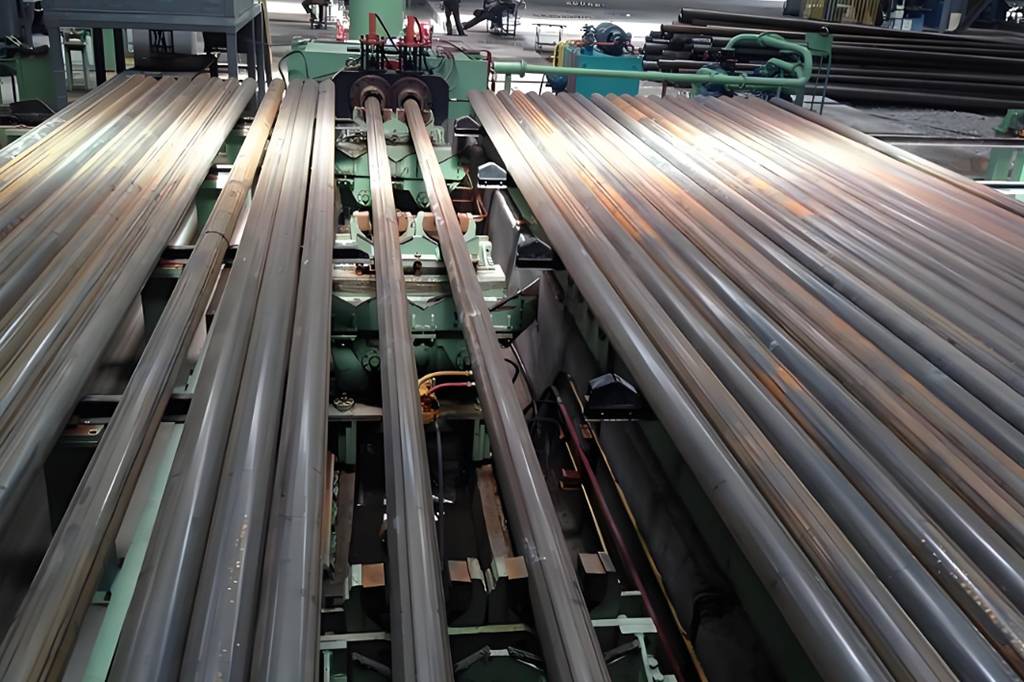
Integrate inline testing for high-volume lines to catch defects early and cut rework.
How buyers should read test certificates
-
Look for test pressure and hold time. If either is missing, ask for clarification.
-
Check whether the test was destructive (burst) or nondestructive (hydrostatic). Destructive tests do not represent every shipped item.
-
Request traceable logs when project criticality is high — this helps during audits.
Explaining testing in plain terms helps both technical teams and procurement make better decisions. A steel pipe testing machine is not a black box — it’s a controlled way to prove a product will behave when it’s put to work. Good tests protect reputation, reduce returns, and save money in the long run.


