


 HOME
HOMEPipe pressure testing machine testing speed vs pressure stability analysis
20 April 2026
In pipe manufacturing, faster testing is always tempting. But here’s the truth most factories learn the hard way:Higher speed often risks lower pressure stability.
A high-performance Pipe pressure testing machine must balance testing speed and pressure stability — because pushing too fast can compromise accuracy, safety, and even product quality.This article breaks down the real relationship between speed and stability, with practical insights from actual production environments.
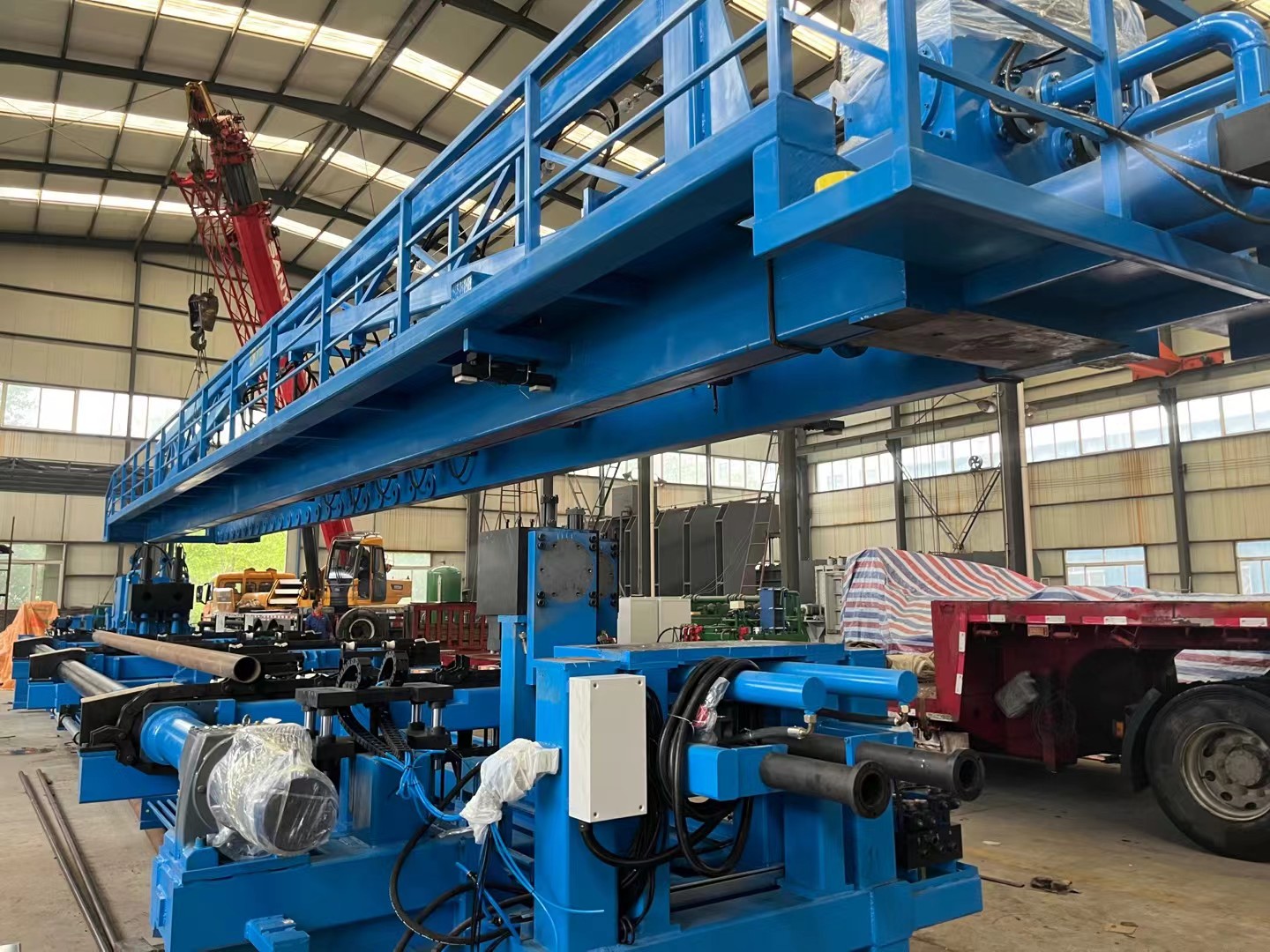
What Is Pressure Stability in Pipe Testing?
Pressure stability means maintaining a constant internal pressure without fluctuation or drop during the hold phase.
In a typical hydrostatic process:
- The pipe is filled with water
- Pressure is increased gradually
- The system is held at target pressure
- Any drop indicates leakage or weakness
If pressure remains stable, the pipe passes the test
Key point: Stability is not optional — it’s the core indicator of pipe integrity.
Why Testing Speed Matters
A modern Pipe pressure testing machine is designed to reduce cycle time. Faster testing means:
- Higher throughput
- Lower cost per pipe
- Better production efficiency
However, increasing speed — especially during pressurization — introduces risks:
- Pressure overshoot
- Water hammer effects
- Inaccurate readings
- Longer stabilization time
Industry practice shows pressure should be raised gradually and in stages to avoid instability
The Core Conflict: Speed vs Stability
Let’s break it down simply:
|
Factor |
High Speed Testing |
High Stability Testing |
|
Pressurization |
RateFast |
Controlled / gradual |
|
Accuracy |
Medium |
High |
|
Risk Level |
Higher |
Lower |
|
Leak Detection |
Less reliable |
Highly reliable |
|
Equipment Stress |
Higher |
Lower |
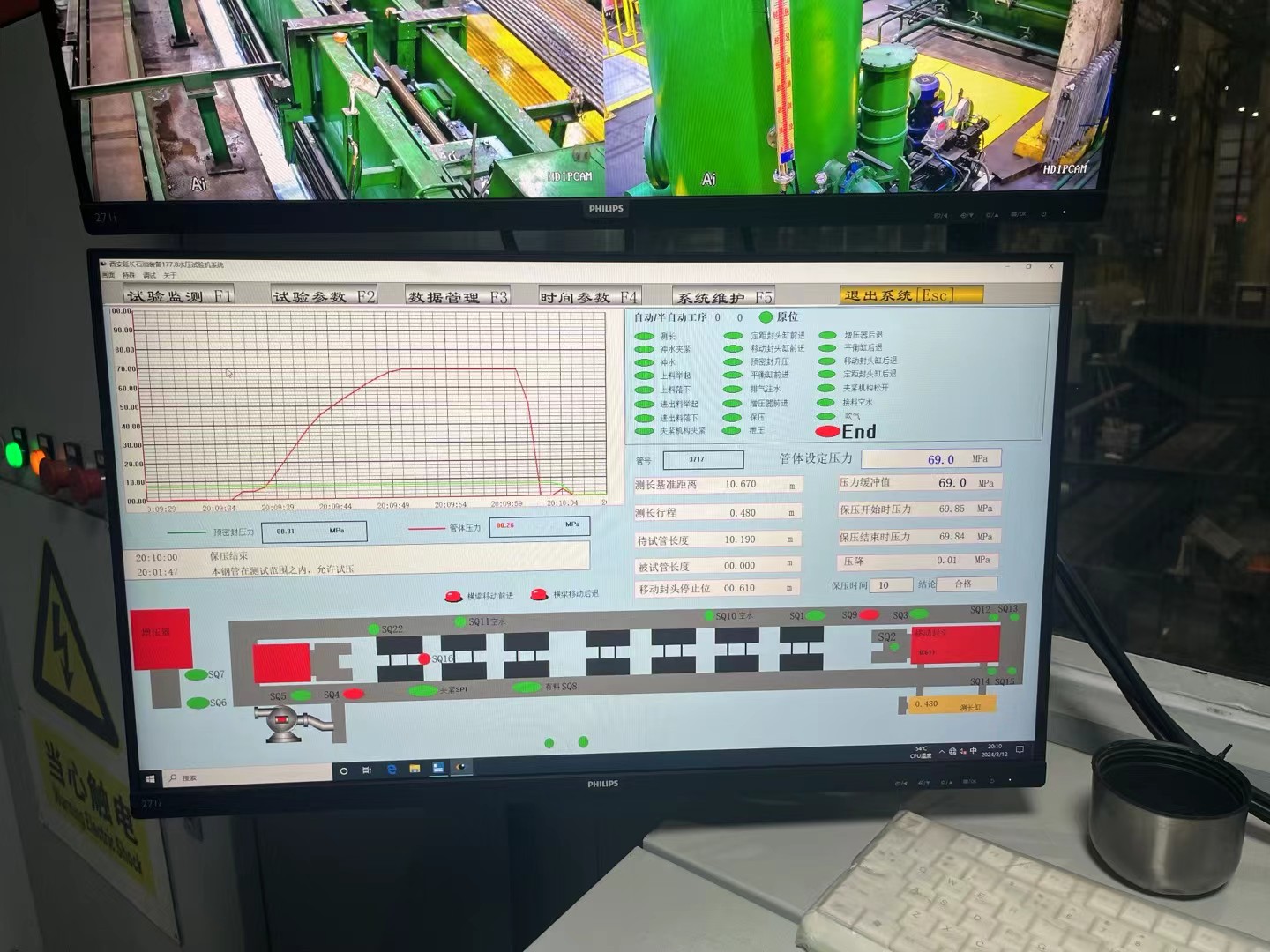
How a Pipe Pressure Testing Machine Balances Both
A well-designed Pipe pressure testing machine doesn’t choose one over the other — it optimizes both.
1. Controlled Pressure Ramp-Up
Instead of instant pressurization:
- Increase pressure in steps (25% → 50% → 90% → 100%)
- Pause between stages
This reduces shock and improves stability
2. High-Precision Pressure Control Systems
Modern machines use:
- Servo-controlled pumps
- Proportional valves
These ensure:
- Smooth pressure curves
- No sudden spikes
Real insight: Cheap machines go fast but unstable.
3. Air Removal
Air is compressible — water is not.
If air remains inside:
- Pressure fluctuates
- Readings become unreliable
Proper air purging ensures true pressure stability
4. Intelligent Hold-Time Monitoring
A high-end Pipe pressure testing machine:
- Tracks pressure decay curves
- Detects micro-leaks
- Adjusts automatically
Because hydrostatic testing relies on detecting pressure drop over time
5. Pump Selection Matters
- High-flow pumps → faster filling
- Stable pumps → smoother pressure
Best practice: combine both, not just “faster pump = better”.
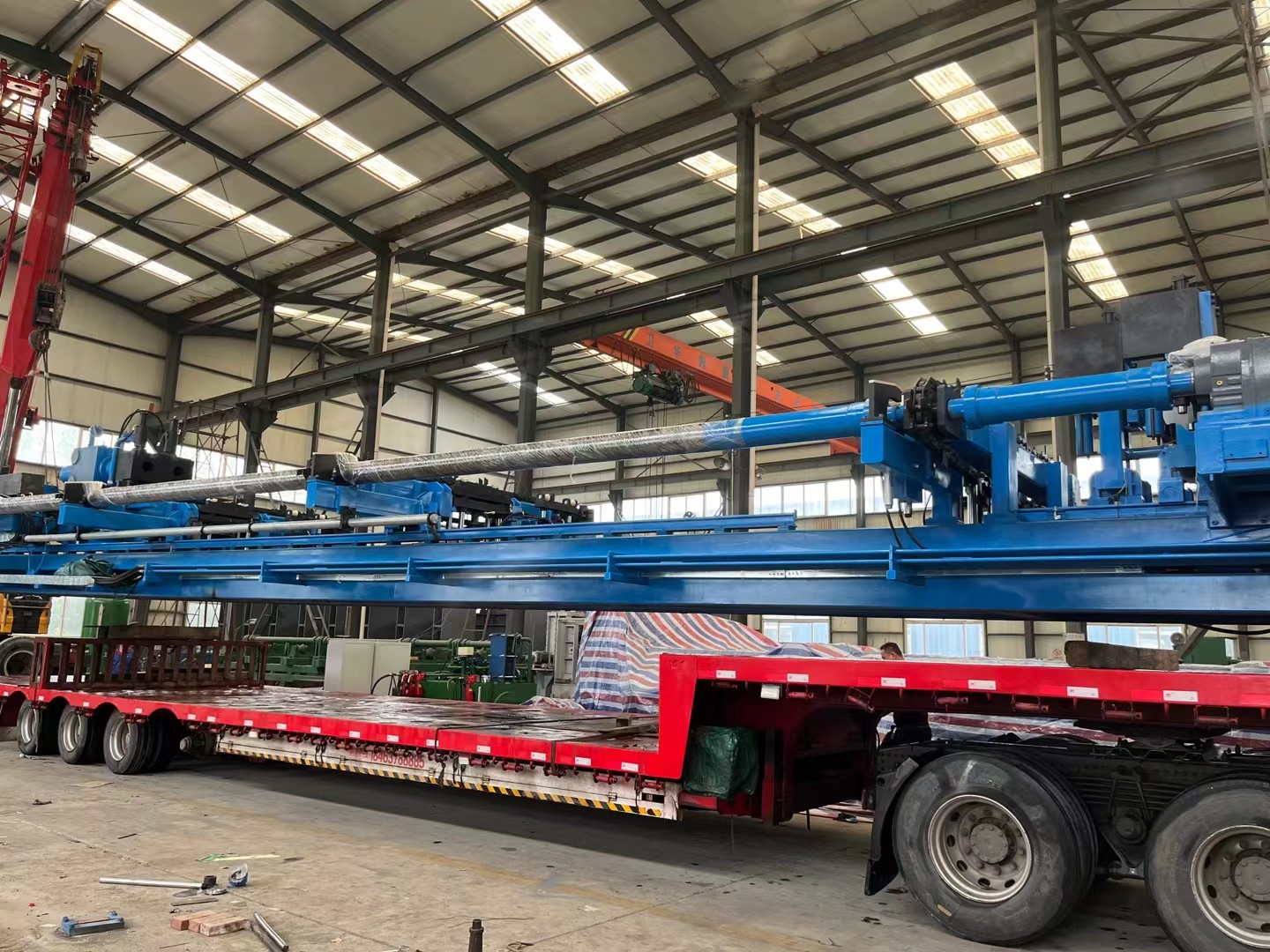
Real Factory Example: Speed Optimization Gone Wrong
One manufacturer tried to:
- Increase pressurization speed by 40%
Result:
- Frequent pressure fluctuations
- False failures
- Re-testing increased total cycle time
After adjusting:
- Slower ramp-up
- Better air removal
Final outcome:
- Cycle time reduced by 25%
- Accuracy significantly improved
Best Balance Strategy
Here’s a proven approach used in real production:
|
Stage |
Recommended Strategy |
|
Filling |
Fast (high flow) |
|
Air Removal |
Slow and complete |
|
Pressurization |
Gradual staged increase |
|
Holding |
Stable monitoring |
|
Depressurization |
Controlled release |
Insight:Speed where safe, control where critical.
Common Mistakes That Kill Stability
Many factories unknowingly create instability:
- Over-speed pressurization
- Ignoring air inside pipes
- Using low-quality pressure sensors
- Skipping staged pressure increase
- Poor machine calibration
Even the best Pipe pressure testing machine will fail if these are ignored.
Final Thoughts: Smart Speed Wins, Not Fast Speed
A Pipe pressure testing machine is not just about how fast it runs — it’s about how reliably it proves pipe quality.
The real goal is:
Fast enough to improve productivity
Stable enough to guarantee safety
Factories that understand this balance:
- Reduce rework
- Improve pass rates
- Gain customer trust
And ultimately — win more orders.


